Most people arrive in Zanzibar with a picture in their head: white sand, turquoise
water, swim whenever you feel like it. On much of the east coast that picture is
true for about half the day.
The tide problem nobody mentions
Along the east and southeast coasts the ocean retreats several hundred metres twice
a day. At low tide you walk out across wet sand and seagrass looking for water deep
enough to swim in, and by the time you find it you are a long way from your towel.
It is not a flaw — the tidal flats are their own kind of beautiful, and the seaweed
farms out there are worth seeing — but it does mean swimming becomes a matter of
consulting a timetable.
Kendwa, on the northwest tip of the island, barely moves. The water stays deep
enough to swim in from morning to night, every day of the year. It is the single
most practical reason to base yourself on this stretch of coast, and it is the thing
guests mention most often once they have stayed somewhere else on the island first.
It faces the sunset
The other reason is orientation. Kendwa Beach faces west, so the sun goes down
straight out in front of the sand rather than somewhere behind you. By six o'clock
the whole bay turns the colour of the inside of a shell, and the dhows working their
way back up the coast pass through the middle of it.
This sounds like a small thing. It is not. A west-facing beach changes the shape of
your evening — people drift down to the sand at five, the light does what it does
for an hour, and dinner happens afterwards rather than in the dark.
Close to Nungwi, but not Nungwi
Kendwa sits about three kilometres down the coast from Nungwi. At low tide you can
walk between them along the beach in well under an hour.
That distance matters. Nungwi is busier, louder and more built up — a good morning
out and a working fishing village where dhows are still made by hand on the sand.
Kendwa keeps the same water and loses most of the noise.
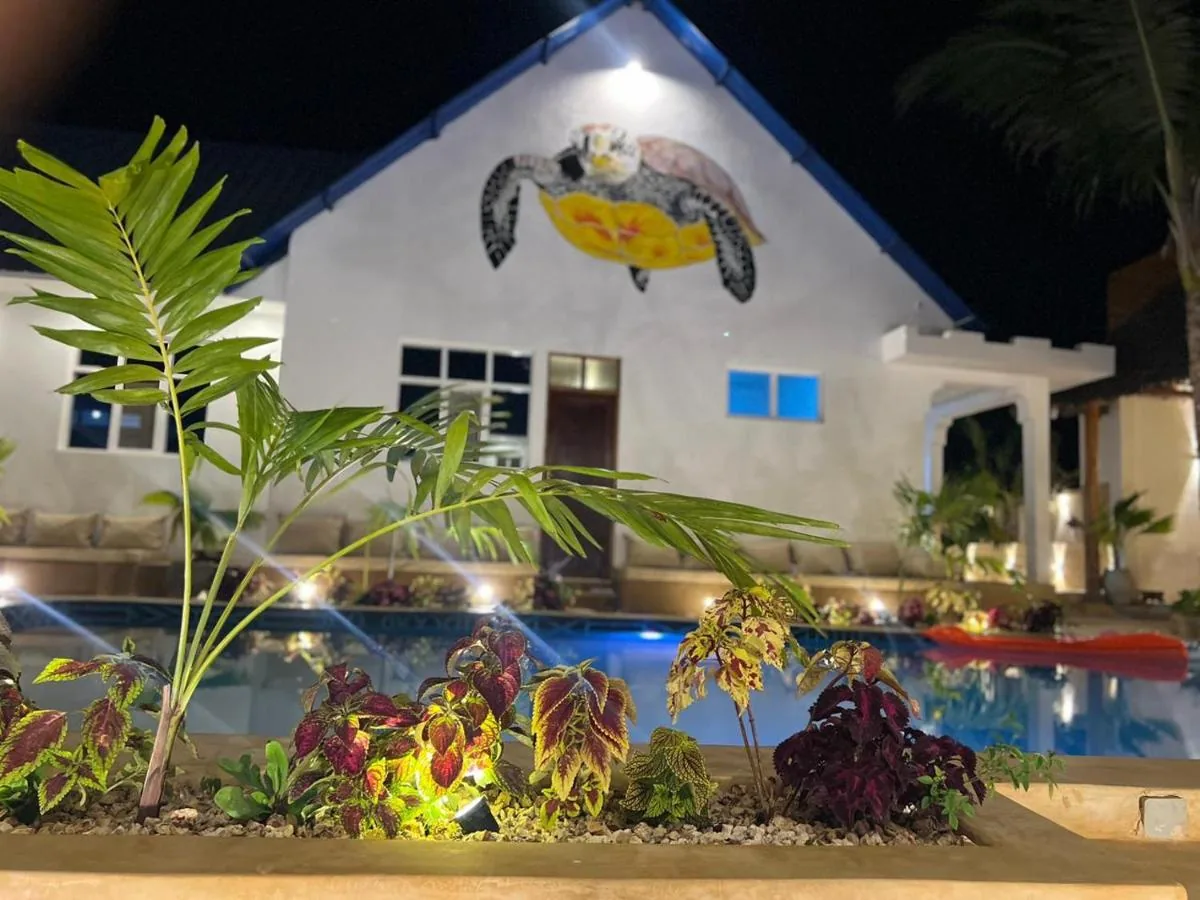
Our own lane is a few minutes back from the shore, which puts another layer between
you and the beach bars without putting the sand out of reach. Eight minutes on foot,
down a lane, and you are on it.
What this means for where you stay
If swimming matters to you, the north-west corner of the island removes a variable
that the east coast cannot. If quiet also matters, being set back from the beach
itself is worth more than a sea view — you can always walk to the sea, but you
cannot walk away from a sound system.